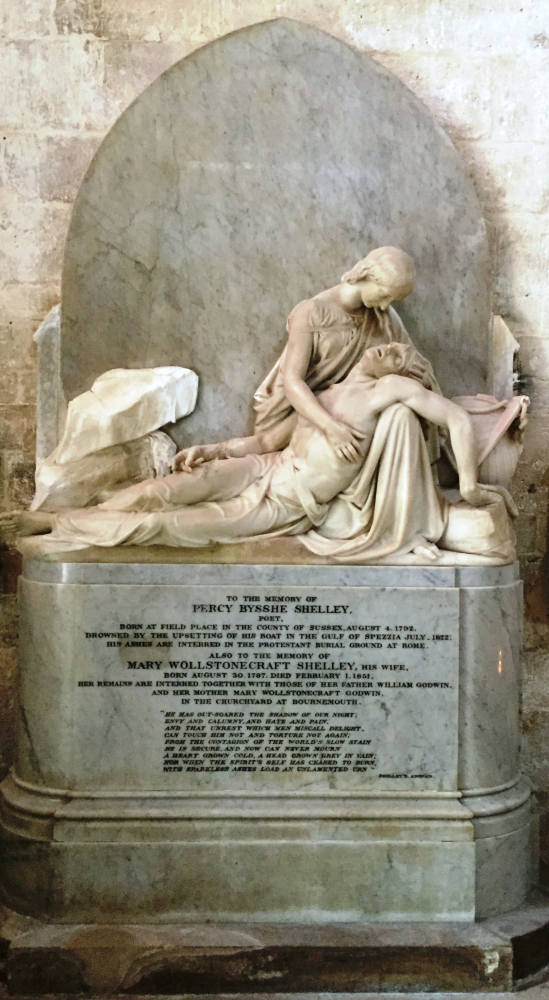
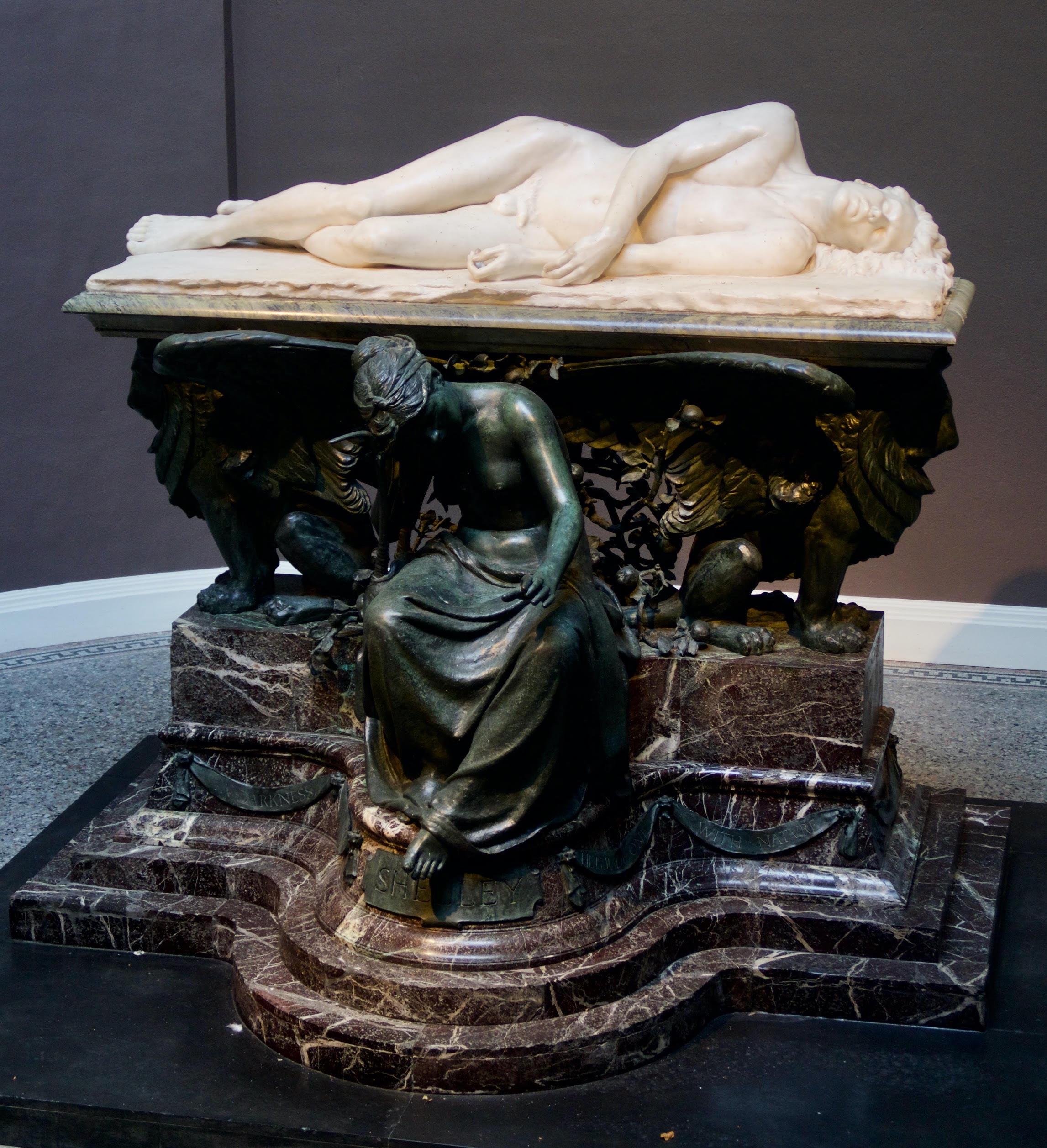
Bette London "Mary Shelley, Frankenstein, and the Spectacle of
Masculinity" (1993)
** Homework Questions **
471:
How, according to London, does the statue of Mary
and Percy Shelley contribute "to the narrative production and
circulation of hierarchically ordered, gendered literary
history" (471)?
What does London mean by "the spectacle of masculinity"
(471)?
472:
What does London mean by "the site of masculinity" (472)?
473:
Explain: "[T]he shifting configurations that mark the
novel's reinventions of its central scene destabilize the
sexual hierarchies that underwrite the novel's meaning" (473).
476:
How, according to London, is it true that Rieger's
text "participates in and reproduces conventional gendered
readings" of the novel (476)?
476-77:
How, according to London, does Mary Shelley's own 1831
Introduction to the novel also contribute to such readings?
477:
Explain: "Percy's presence in every stage of 'the
book's manufacture' implicates the masculine in the production
of monstrosity" (477).
479:
Describe the significance, according to London, of Onslow
Ford's statue of Percy Shelley at Oxford.
479-80:
What, according to London, is "one of Frankenstein's
most unsettling features" (479)?
480:
In what way, according to London, is Anne Mellor's critical
project aligned with Rieger's?
Other Discussion Questions: 470:
In what ways, according to London, does the statue of Mary
and Percy Shelley fix "the contradictions that constitute and
surround the Shelleyan legacy" (470)?
Explain: "[T]he marginalization of Mary in the figure of
maternal adoration reads with equally disturbing incongruity"
(470-71).
471:
Explain: "The narrative that the painting details ... binds
Shelley's preeminence (public and private) to the lasting
rites of masculinity" (471).
472:
What does London mean by "the ... drama of the lifeless
masculine body" (472)?
How, according to London, does Weekes's monument
reproduce "the novel's iconographic centerpiece" (472)?
Explain: "The memorials reactivate Shelley's own
iconography" (472).
473-74:
Explain: "It is thus the spectacle of woman's
uncontrollable materiality ... that gives distinctive shape to
the already constructed male body" (473-74).
474:
Explain what London says about the acceptance of Gilbert
and Gubar's interpretation of the novel.
Explain: "[C]onventionalized operations of gender have
foreclosed access to Frankenstein's explorations of
masculinity" (474).
475:
What, according to London, is the central argument
of Rieger's introduction to his edition of Frankenstein?
How, according to London, does Rieger's discussion
of Frankenstein cause Mary Shelley's presence to
diminish?
476:
Why would a text's perceived lack of unity be considered
feminine?
478:
How, according to London, does Rieger suggest that Mary
Shelley participates in "the unsexing of Percy" (478)? Does
London agree with Rieger? Explain.