Felicia Hemans

Felicia Hemans (1793-1835)
Things to Consider:
- Relation to Byron
- Figure of the Female/Artist
- Suicide and Honor
- History of Greece and Orientalism
- Images of the American Indian
Background:
898-99:
- Explain how, according to the
editors, Hemans fits within the cult of domesticity: In
other words, in her poetry, does Hemans subscribe to or
critique/rebel against traditional gender roles/attitudes of
her time? Explain.
"The Bride of the Greek Isle" (1828)
(pge #s refer to the pdf)
341:
- What does "Eudora" mean?
(see fn 4, pge. 346)
Why might this meaning be significant in the poem?
- Why does Eudora cry when she remembers her childhood?
342:
- Explain: "A changeful thing /
Is the human heart, as a mountain spring" (77-78).
345:
- Why has Eudora set the ship on fire?
- Why does she allow herself to die in the fire?

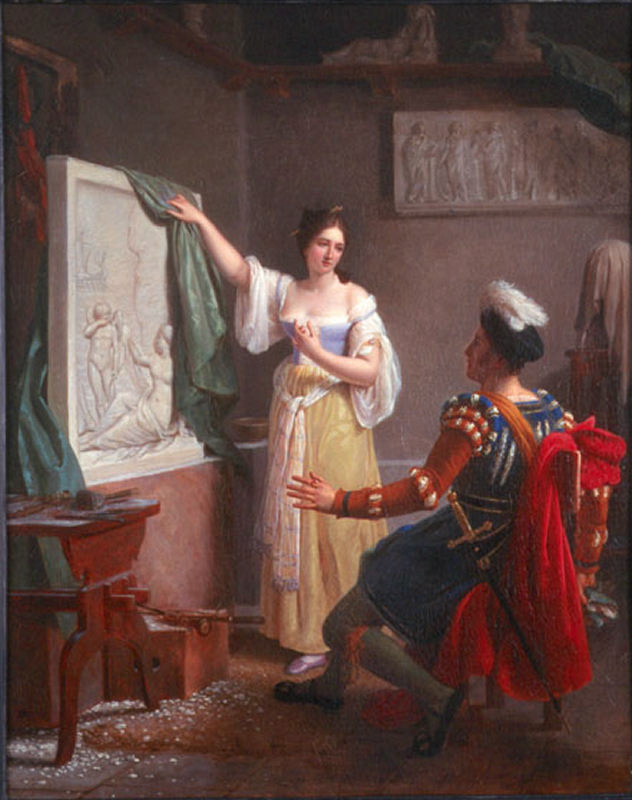
"Properzia Rossi" (1828)
905:
- What exactly is this poem about?
- Explain the speaker's motivation in lines 9-13.
906:
- Why has Rossi chosen Ariadne as the subject of her last
piece? What parallels exist between her story and Rossi's?
907:
- Why does Rossi consider fame
"worthless" (85)? Does Hemans agree? Explain.
Other Discussion Questions:
"The Bride of the Greek Isle"
343:
- Why have the pirates invaded the wedding celebration?
"Properzia Rossi"
905:
- Can any autobiographical connections be drawn to this
work? Explain.
- Explain the epigraph.
906:
- Explain lines 37-41.
- Explain: "Yet all the vision that within me wrought,
/ I cannot make thee!" (61-62).