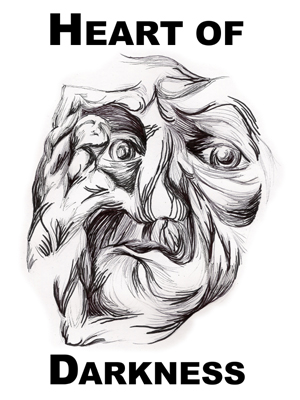
Joseph Conrad (1857-1924) Heart of Darkness (1899/1902)
Things to Consider:
Comparison to Kipling's "The Man Who Would Be King"
Racism and Imperialism
Achebe's "An Image of Africa"
"Conrad was a bloody racist" (9).
"I am talking about a book that parades in the most
vulgar fashion prejudices and insults from which a section
of mankind has suffered untold agonies and atrocities in the
past and continues to do so in many ways and many places
today. I am talking about a story in which the very
humanity of black people is called in question. It
seems to me totally inconceivable that great art or even
good art could possibly reside in such unwholesome
surroundings" (11).
Frame Narratives and Points of View
Appearance vs. Reality
Role of Women
Discussion Questions: 1050:
Explain Conrad's use of intermediate narrators in Lord Jim and Heart of Darkness.
What modern narrative strategies does
Conrad employ in his writings?
1051:
In what ways is Heart of Darkness
autobiographical? Explain.
1055:
How, according to Marlow, has England
"been one of the dark places of the earth" (1055)? How
does this discussion function as an introduction to Marlow's
discussion of the Congo?
1056:
Explain: "Your strength is
just an accident arising from the weakness of others"
(1056).
1057:
Explain the significance of the uncoiled snake image.
1063:
Explain the significance of the
discussion of the building of the railway. How does it
compare with the firing of the French ship on 1062 or the
description of the hole later on this page?
1065:
Who is Kurtz?
1069:
Explain: "The wilderness without a sound took him
into its bosom again" (1069).
1072-73:
Why can't Marlow get rivets to fix his steamboat?
Other Discussion Questions: 1051:
How, according to the editors, does Conrad's pessimism
compare with Hardy's?
1053:
Who is the narrator? Should he introduce himself?
Explain.
1054
What, according to the narrator, is "the biggest, and the
greatest, town on earth" (1054)? Why?
1055:
How is Marlow unlike the other seamen?
Explain: "There is nothing mysterious to a seamen
unless it be the sea itself, which is the mistress of his
existence and as inscrutable as Destiny" (1055).
1056:
What is the "fascination of the abomination" (1056)?
1057:
What are the green, red, and white "flames" gliding on the
river?
1058:
Explain what has happened to Fresleven.
1059:
Why is the trading company's office so gloomy?
1060:
Why does the Company doctor measure Marlow's head?
1061:
Explain Marlow's suggestion that women are "out of touch
with truth" (1060). (See also 1088. Perhaps an interesting
comparison can also be made to Jack's comments in The
Importance of Being Earnest 964.)
Why is the voice of the surf "like the speech of a brother"
(1061)?
1062:
Why is the French man-of-war shelling the coast?
Explain: "It was like a weary pilgrimage amongst
hints for nightmares" (1062).
1063:
In what ways is Marlow's description of the Africans on
this page racist? Explain. (See Achebe's discussion for
his perspective).
What is the "deathlike indifference of unhappy savages"
(1063).
1065:
Describe the Company's chief accountant.
1066:
Explain Marlow's analogy involving Deal and Gravesend.
1067:
Explain: "I felt I was becoming scientifically
interesting" (1067). (Compare with the Company doctor's
statements on 1060).
Describe the Manager.
1068:
Explain: "Out there there were no external checks"
(1068).
1069-70:
Summarize the discussion of the brick making.
1070:
Explain what Marlow says about the horse and the halter.
Describe Kurtz's painting of the blindfolded woman.
What is "the new gang--the gang of virtue" (1070-71)?
1071:
What is the "immensity" looking at Marlow and the brick
maker?
1072:
Explain: "He was just a word for me. I did not see
the man in the name any more than you do" (1072).
Explain the Narrator's interruption of his discussion of
Marlowe's story.
1074:
Why does Marlowe think he will now get the rivets?
Explain his exchange with the foreman.
What is the Eldorado Exploring Expedition?
Part Two: Discussion Questions: 1078:
Explain: "The prehistoric man was cussing us,
praying to us, welcoming us—who could tell? We were cut off
from the comprehension of our surroundings" (1078).
Explain: "That was the worst of
it—this suspicion of their not being inhuman" (1079).
Explain the comparison of the fireman with a dog on his
hind legs.
1085:
Explain: "Sticks, little sticks, were flying about"
(1085).
1087:
Explain: "I had never imagined him as doing, you
know, but as discoursing. . . . The man presented
himself as a voice" (1087).
1093:
Why has Marlow's boat been
attacked? (See also 1099).
Part Three: 1096:
Explain: "What would be the next definition I was
to hear? There had been enemies [1062], criminals
[1063], workers—and these were rebels" (1096).
1097:
Describe the significance of the
woman.
1104:
To
what is Kurtz referring when he says, "The horror! The
horror!" (1104)?
1110:
Why does Marlow lie about Kurtz's
final words? (See Marlowe's comments about women on 1061 and
1088.)
Other Discussion Questions:
1075-76:
Why does Conrad have Marlow hear only bits and pieces of
the conversation between the manager and his uncle? What is
their attitude toward Kurtz?
1076:
Explain the uncle's "black display of confidence" (1076).
1077:
Explain: "Going up the river was like traveling back
to the earliest beginnings of the world" (1077).
Explain: "There were moments when one's past came
back to one" (1077).
Explain: "When you have to attend to . . . the mere
incidents of the surface, the reality . . . fades. The
inner truth is hidden—luckily, luckily" (1077).
1079:
Why does the earth seem unearthly?
Explain: "For good or evil mine is the speech that
cannot be silenced" (1079).
1080:
Explain the significance of the book Marlow finds.
1081:
Explain: "What did it matter what any one knew or
ignored?" (1081).
What is the "white shutter" that falls around the boat?
1083:
Why, according to Marlow, have the "cannibals" not yet
eaten them?
1084:
Explain: "Even extreme grief may ultimately vent
itself in violence—but more generally takes the form of
apathy" (1084).
Explain: "What we afterwards alluded to as an attack
was really an attempt at repulse" (1084).
1085:
Why, in the buildup to his description of the "attack,"
does Marlow focus so much on the details of the boat? How does
this section relate to the narrator's claims about
storytellers and "what their audience would best like to hear"
(1057)?
1088:
Explain: "They—the women I mean—are out of
it—should be out of it" (1088). (See also 1061.)
Explain: "Everything belonged to him—but that was a
trifle. The thing was to know what he belonged to, how many
powers of darkness claimed him for their own" (1088).
Explain the references to butchers and policemen.
1089-90:
Describe Kurtz's "pamphlet."
1090:
Describe the helmsman's "funeral." How does it compare
with Kurtz's on 1104?
1092:
Explain: "You don't talk to that man—you listen to
him" (1092).
1093:
Explain: "His need was to exist" (1093).
1095:
Explain the significance of the shrunken heads.
1098:
Explain Kurtz's words: "Save me!—Save the ivory you
mean" (1098).
1100:
Why is Marlow terrified to discover Kurtz is gone from
the boat?
1102:
Explain: "He had kicked himself loose of the earth. . . .
Confound the man! he had kicked the very earth to pieces"
(1102).
Explain: "His intelligence was perfectly
clear—concentrated, it is true, upon himself with horrible
intensity, yet clear" (1102).
1103:
Describe the comparison of Kurtz's life and the current.
1106:
Why does Marlow refuse to give up Kurtz's documents?
1108:
Why does the room seem to get darker as Marlow talks to
Kurtz's Intended?
Why does Marlow wonder whether he protected the correct
batch of papers?
1109:
Why does Marlow recall the other woman when the Intended
stretches out her arms to the window?